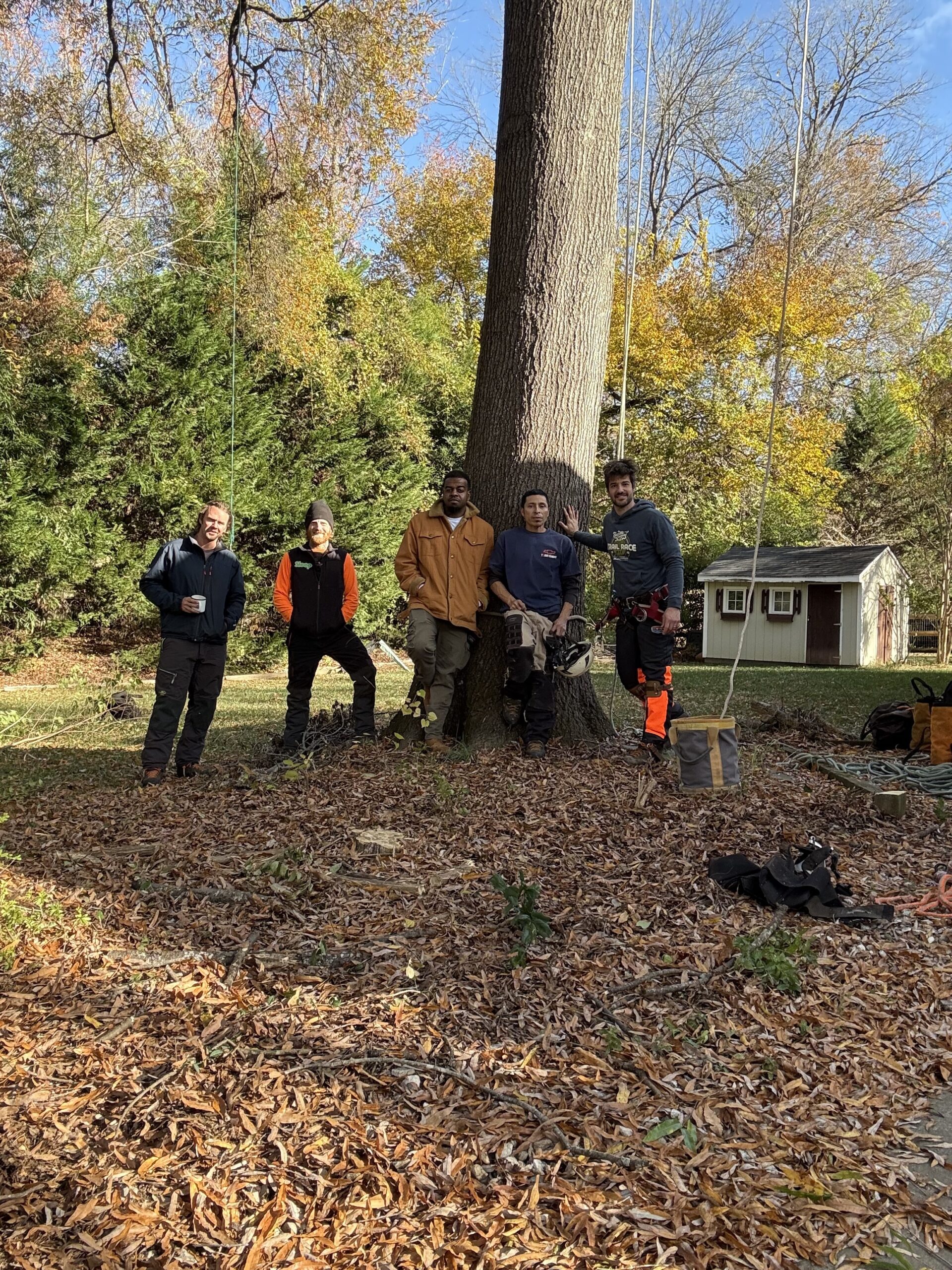
Charlotte has long been known as a city defined by its trees. Mature oaks, maples, and hardwoods shape neighborhoods, cool our streets, and give the Queen City much of its character. But as development accelerates across the metro area, that identity is under pressure.
Charlotte’s urban tree canopy currently covers about 47% of the city, a strong number compared to many U.S. cities — but it’s declining, not growing. Recent urban canopy assessments show a gradual loss tied largely to development, infrastructure expansion, and the removal of large, mature trees. If that trend continues unchecked, projections suggest canopy coverage could drop significantly over the coming decades.
That’s a problem not just for aesthetics, but for livability. Urban tree canopy reduces heat, manages stormwater, improves air quality, and increases property values. Simply put: trees are infrastructure.
Why Heritage Trees Matter
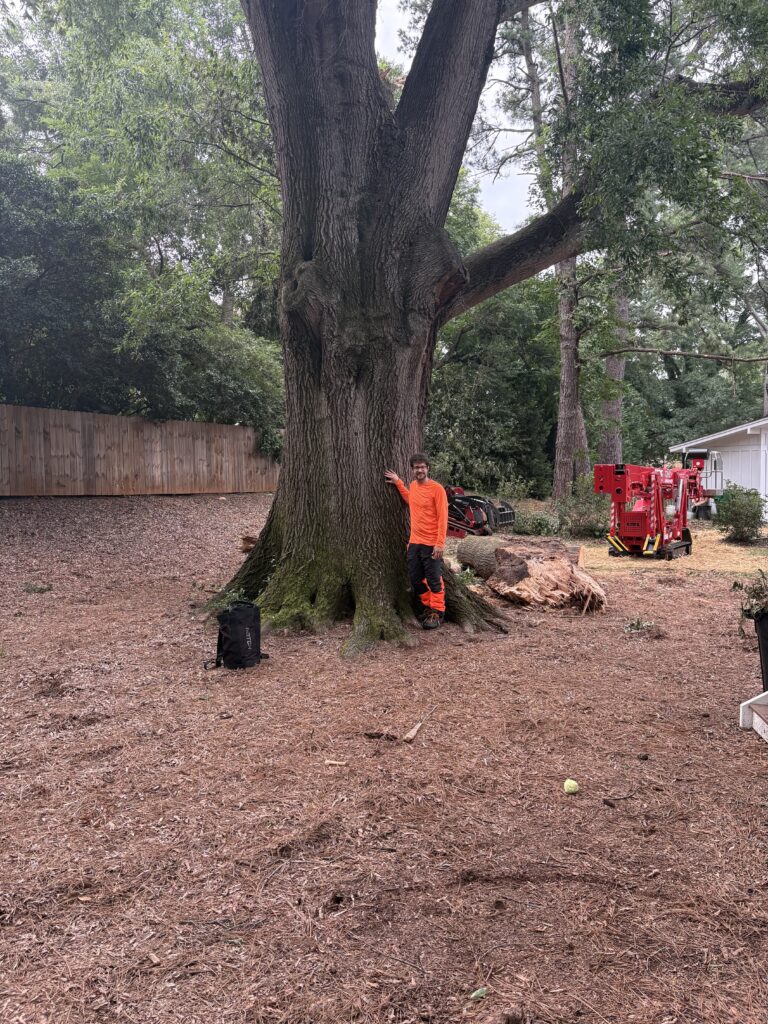
Heritage trees (trees 30″ and larger in diameter at breast height) – provide outsized benefits compared to young plantings. A single mature tree can deliver the environmental value of dozens of newly planted saplings. That’s why the City of Charlotte places special protections on these trees.
Under Charlotte’s Unified Development Ordinance (UDO), heritage trees generally cannot be removed without approval, and when removal is allowed, mitigation is required. In many cases, this means replanting multiple trees to offset the loss of a single heritage tree, or paying mitigation fees when replanting on site isn’t feasible.
The intent is clear: development may be necessary, but losing large trees should never be taken lightly.
Development vs. Canopy: Finding the Balance
Charlotte is growing — rapidly. Commercial projects, higher-density housing, and infrastructure improvements are reshaping the landscape. While growth brings opportunity, it also brings hard choices.
The challenge for Charlotte isn’t stopping development; it’s how to develop without turning the city into a sea of concrete. Protecting existing mature trees, designing projects around them when possible, and replanting strategically are critical steps if the city hopes to keep canopy coverage stable — or ideally, increase it over time.
Just keeping tree canopy at 47% would be a win. Sadly however, it most likely will keep dropping.
A Shared Responsibility
Preserving Charlotte’s tree canopy isn’t just a city government issue. Property owners, developers, and residents all play a role. Engaging qualified arborists early, understanding tree health and risk, and making informed decisions about preservation versus removal can make a real difference.
Charlotte doesn’t have to choose between progress and trees. With thoughtful planning and respect for the urban forest, we can have both.
Because Charlotte shouldn’t become a city of concrete.
It should be a City of Trees!!
For more information on Charlotte’s urban forestry program and tree protection requirements, visit the City of Charlotte’s Urban Forestry page:
https://www.charlottenc.gov/Growth-and-Development/Getting-Started-on-Your-Project/Urban-Forestry
MTM Tree Services LLC is an owner / operator led tree service crew in Charlotte NC. Text or call 704-965-3589 for a free quote.