
When a homeowner contacts a tree service company, they don’t always know exactly what they need. They might be concerned about a large tree near their home, wondering whether an aging oak is healthy, or simply looking for ways to improve the appearance of their property.
Sometimes they want a tree removed. Other times, they want to do everything possible to preserve it. And often, they’re not quite sure what the right decision is.
At MTM Tree Services, we believe the most important part of any tree assessment is understanding “what the homeowner wants to accomplish”.
Our job isn’t simply to sell tree removal or pruning services. It’s to help homeowners make informed decisions about their trees, their property, and their investment.
Every Tree Assessment Starts With Listening
Before we begin making recommendations, we want to understand why the homeowner contacted us in the first place.
Are they concerned about safety? Is a tree growing too close to the house? Are branches blocking sunlight or interfering with other landscaping? Do they love a particular tree and want to preserve it for another generation?
These questions matter because two homeowners with nearly identical properties might have very different objectives.
One homeowner might prioritize preserving a mature oak at almost any reasonable cost. Another might prefer removing that same tree to create more usable yard space or reduce maintenance.
Neither objective is necessarily wrong.
Our responsibility is to understand those priorities and explain the available options, including the benefits, limitations, and costs of each approach.
Looking at the Entire Property, Not Just One Tree
A good tree assessment involves more than examining the specific tree that prompted the call.
When we visit a property in Charlotte, we also look at the surrounding trees, their growing conditions, and how they interact with the home and landscape.
Depending on the property, we may evaluate:
– Tree health: Visible signs of decline, disease, insect activity, deadwood, or structural defects.
– Tree structure: Branch attachments, competing stems, excessive end weight, and other conditions that may warrant attention.
– Proximity to structures: How trees and branches interact with homes, driveways, fences, and other improvements.
– Growing conditions: Soil conditions, root-zone disturbances, drainage, and competition from nearby vegetation.
– Aesthetics: Opportunities to improve the appearance of individual trees or the overall landscape.
– Long-term management: How today’s decisions may affect tree health, maintenance requirements, and future costs.
We frequently notice conditions that homeowners haven’t recognized. Sometimes they’re important concerns. Other times, they’re relatively minor issues that can simply be monitored.
We believe it’s worth pointing these things out, even when they have nothing to do with the original reason for our visit.
That doesn’t mean we’re recommending additional work. It means we’re helping the homeowner better understand their property.
Identifying the Trees Worth Keeping for the Long Term
Another important part of our tree assessment process is identifying which trees the homeowner wants to preserve for the long term.
Not every tree on a property has equal value. Some trees are healthy, structurally sound, and well-positioned to remain attractive features of the landscape for decades. Others may be less desirable because of their species, condition, location, or competition with more valuable trees.
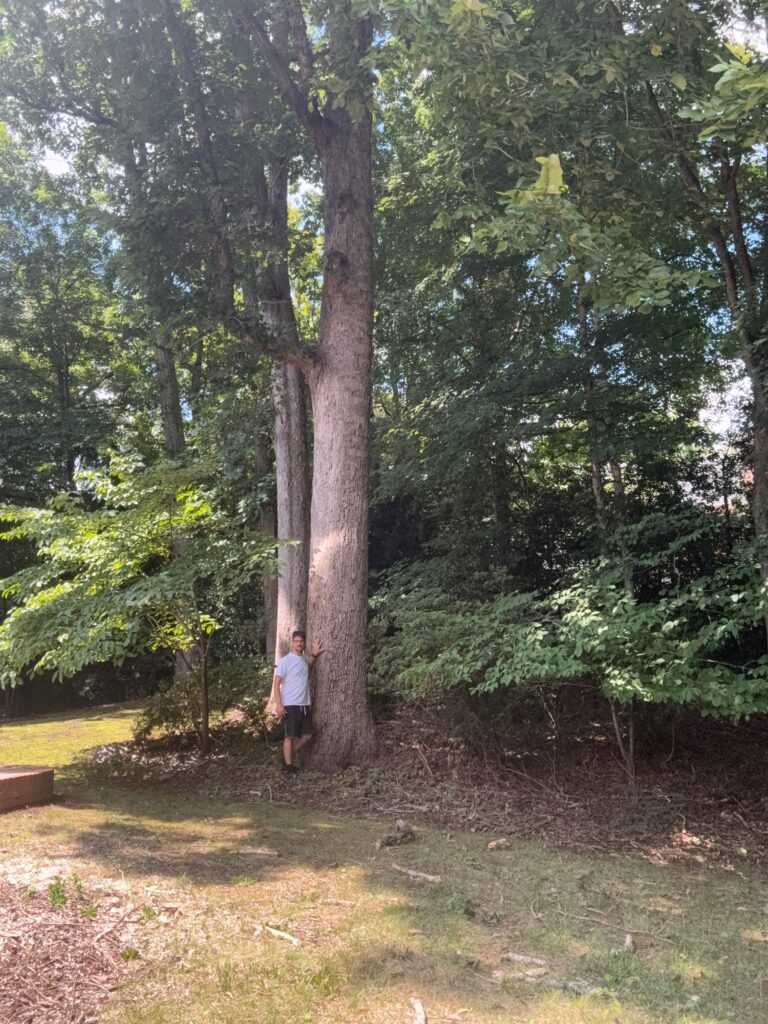
We often begin by identifying the trees that should be prioritized for long-term preservation. These might include a healthy, well-established oak or maple that provides significant shade, beauty, and character to the property.
Once we’ve identified those priority trees, we look at the surrounding vegetation and consider how other trees may be competing with them for sunlight, growing space, water, and nutrients.
In some situations, removing a smaller or less desirable tree can benefit a more valuable tree by reducing competition and providing additional room for future growth. In other cases, selective pruning may accomplish the same objective without requiring removal.
This approach allows us to think beyond the immediate condition of individual trees and consider how the entire landscape will develop over the next 10, 20, or even 30 years.
The goal isn’t necessarily to keep the most trees. It’s to preserve the right trees and give them the best opportunity to thrive.
Of course, removing competing trees isn’t always beneficial or necessary. We consider the species, root systems, growing conditions, and potential effects of removal before making a recommendation.
Ultimately, we want homeowners to think about what they envision for their property in the future. By identifying the trees they value most and managing the surrounding landscape accordingly, we can help them make decisions today that support a healthier, more attractive property for years to come.
Tree Removal Isn’t Always the Best Answer
Tree removal is an important part of our business, and there are plenty of situations where it’s the most appropriate recommendation.
A severely declining tree, a tree with significant structural problems, or one that presents an unacceptable risk to a nearby structure may need to be removed.
But removal isn’t the only option.
Depending on the species, condition, and objectives, other approaches may include:
– Selective pruning: Removing specific branches to address deadwood, clearance, structural concerns, or appearance.
– Crown reduction: Reducing the length of selected branches using appropriate pruning techniques to manage branch weight, clearance, or structural concerns while retaining the tree.
– Structural pruning: Improving branch architecture, particularly in younger trees, to encourage better long-term development.
– Plant health care: Addressing certain insect, disease, soil, or growing-condition problems that may be affecting tree vitality.
– Monitoring: In some situations, the best recommendation is to leave the tree alone for now and periodically reevaluate its condition.
Not every treatment is appropriate for every tree, and pruning cannot eliminate all risks. Our goal is to consider the available options before recommending a course of action.
We would rather explain why a tree can reasonably be preserved than recommend an unnecessary removal simply because it generates more revenue.
Recommendations Without Sales Pressure
We understand that tree work can be expensive, particularly when dealing with large mature trees.
We also recognize that homeowners have other financial priorities. Just because a tree could benefit from pruning doesn’t necessarily mean that work needs to happen immediately.
During an assessment, we may identify several opportunities for improvement. Some might be priorities, while others can reasonably wait.
We try to distinguish between the two.
If we notice a tree that could benefit from maintenance in the next year or two, we’re happy to explain the work and provide a general idea of what it might cost.
The homeowner can then decide whether to move forward, budget for it later, or take no action.
We don’t believe every observation needs to become a sales opportunity.
Making Recommendations We Would Want for Our Own Homes
One of the questions we try to keep in mind during an assessment is simple:
“If this were our property, what would we do?”
That perspective encourages us to consider the practical value of the work, not just whether the work can be performed.
Would pruning provide a meaningful benefit? Is the tree worth preserving? Would removing it create an unnecessary expense or sacrifice an important landscape feature? Are there conditions that warrant further investigation before making a recommendation?
Of course, our personal preferences aren’t necessarily the homeowner’s preferences. That’s why understanding their objectives comes first.
Our role is to combine those objectives with our knowledge of tree care and provide a recommendation that makes sense for their situation.
When a condition requires additional investigation or a more specialized evaluation, we believe it’s important to acknowledge that rather than pretend every answer is immediately obvious.
Why We Believe This Approach Matters
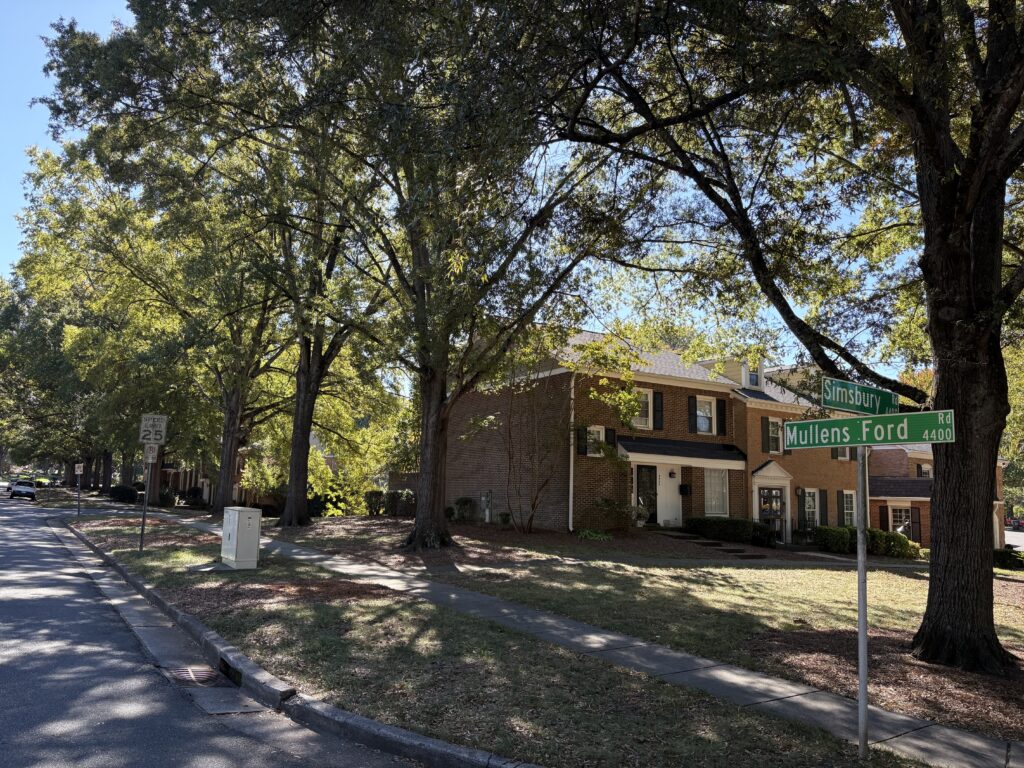
Charlotte has a beautiful urban tree canopy, particularly in established neighborhoods throughout South Charlotte.
Mature willow oaks, white oaks, red oaks, and other large shade trees contribute tremendous value to these properties. They provide shade, character, and environmental benefits that can take decades to replace.
At the same time, trees are living organisms. Their health, structure, and growing conditions change over time. Homeowners need reliable information to make good decisions about managing them.
We believe that taking the time to understand a property, evaluate the available options, and communicate clearly leads to better outcomes.
Sometimes that means a significant removal project. Sometimes it means a relatively small pruning job. And sometimes it means recommending no work at all.
We recognize that this approach may not generate the most revenue from every appointment. But we believe it builds something more valuable over time: trust.
Schedule a Tree Assessment With MTM Tree Services
If you’re concerned about a tree on your property, considering removal, or simply looking for professional guidance on maintaining your landscape, MTM Tree Services would be happy to help.
We serve homeowners throughout Charlotte, NC, with a particular focus on South Charlotte and surrounding neighborhoods.
Our goal is to listen first, evaluate carefully, and help you understand your options so you can make the decision that’s right for your property. You can read more about our Residential Tree Services here! Here’s youtube video about it!
MTM Tree Services is a locally owned tree service in Charlotte NC. Text or call 704-965-3589 for a free quote. Licensed & insured. Certified arborist on staff.