If you own a home in Charlotte, NC, there’s a good chance you have at least one mature tree on your property that’s 25–60 years old.
Some of these trees are beautiful assets. Some quietly turn into expensive structural problems.
As a local tree service working across South Charlotte neighborhoods like Myers Park, Foxcroft, Lansdowne and Stonehaven, we see the same species — and the same failure patterns — over and over again.
Here’s what Charlotte homeowners should know.
⸻
Common Trees in Charlotte, NC
Charlotte’s urban canopy is dominated by a handful of species. These are the ones I work on most frequently.
⸻
- Willow Oak (Very Common — Frequently Problematic in Charlotte)
Willow oaks were heavily planted in Charlotte subdivisions because they grow fast and provide shade quickly.
The problem shows up decades later.
Common structural issues:
• Long, heavy lateral limbs
• Weak branch unions (included bark)
• Internal decay that isn’t visible from the ground
• Large limb failures during storms
Many storm damage calls in Charlotte involve mature willow oaks. They aren’t bad trees — but they require structural pruning and periodic evaluation as they age.
If you have a large willow oak over your home, proactive inspection matters.
⸻
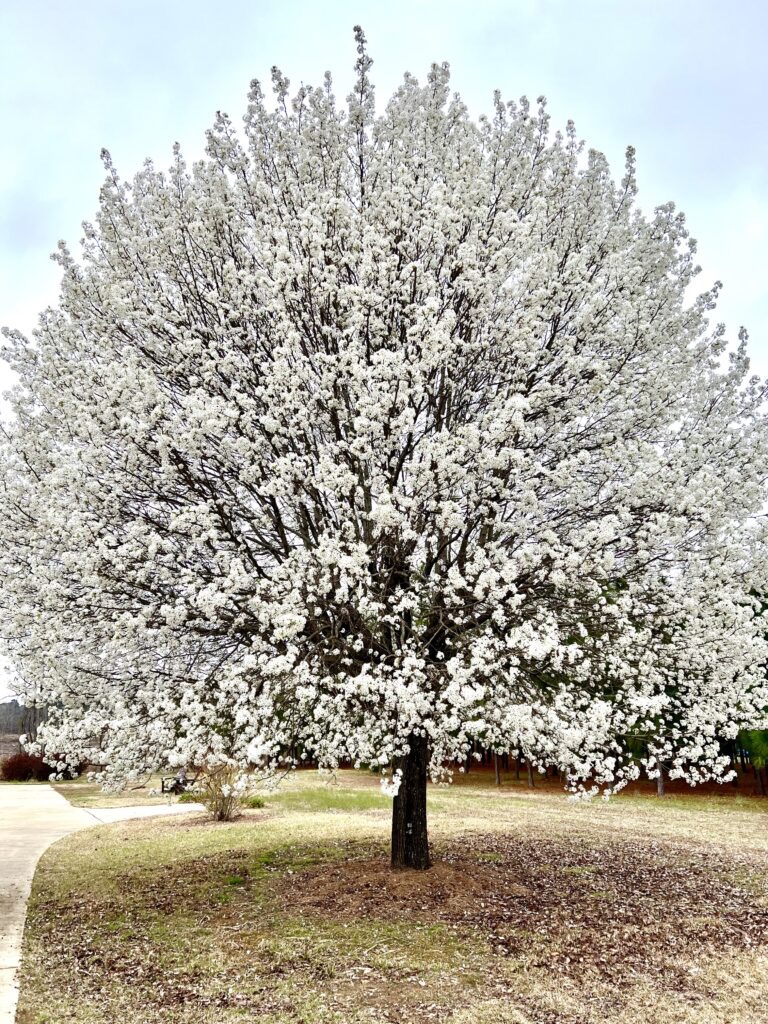
- Bradford Pear (High Failure Rate in Storms)
Bradford pears were popular in older Charlotte neighborhoods.
They bloom well.
Structurally, they’re weak.
Common problems:
• Tight branch angles
• Splitting trunks
• Short lifespan
• Sudden failure during wind or ice
These are among the most common emergency tree removals in Charlotte after storms.
⸻
- Red Maple (Clay Soil Stress Issues)
Red maples grow quickly and look great in fall.
But Charlotte’s dense clay soil creates stress over time.
Common issues:
• Shallow root systems
• Surface roots lifting sidewalks
• Heat stress in summer
• Girdling roots from improper planting
They can thrive here — but only if planted and maintained correctly.
⸻
Even More Common Trees in Charlotte, NC
- Loblolly Pine (Storm Risk Tree)
Loblolly pines are common in wooded lots around Charlotte.
They grow tall and fast.
Problems appear when:
• Soil stays saturated
• Root systems weaken
• Wind events hit
Leaning pines after heavy rain should not be ignored.
⸻
- Tulip Poplar (Heavy Upper Canopy)
Tulip poplars get massive.
Common in older neighborhoods and wooded properties.
Issues include:
• Overextended upper limbs
• Sudden summer limb drop
• Excess canopy weight over structures
These trees often look healthy — until a large limb fails.
⸻
- Sweetgum (Maintenance Headache)
Sweetgums are native and strong.
But many Charlotte homeowners dislike them because:
• Surface roots
• Seed balls
• Driveway cracking
• Yard mess
Not always dangerous — but often removed for practical reasons.
⸻
Why Trees Struggle in Charlotte, NC
Tree problems here aren’t random.
Charlotte has:
• Dense clay soil
• Heavy soil compaction from development
• High summer heat
• Periodic drought
• Strong seasonal storms
Many trees are planted in compacted construction fill. They decline slowly over 10–20 years before visible symptoms appear.
That’s why a tree can “look fine” — until it suddenly isn’t.
⸻
Signs You May Need Tree Removal or Professional Tree Service in Charlotte
If you notice any of the following, it’s worth having a professional evaluate it:
• Large cracks in branch unions
• Mushrooms growing at the base
• Significant deadwood
• Lean after storms
• Soil heaving near roots
• Large limbs hanging over your home
Not every situation requires removal. Many trees can be managed with:
• Structural pruning
• Weight reduction
• Deadwood removal
• Risk assessment
But ignoring warning signs is what leads to emergency calls.
⸻
Tree Service in Charlotte, NC — Removal vs. Pruning
One thing homeowners should understand:
Not every tree needs to come down.
A good tree service in Charlotte should evaluate structure, species, soil condition, and risk — not just recommend removal.
Sometimes removal is necessary.
Sometimes proper pruning extends a tree’s life 10–20 years safely.
⸻
FAQ – Common Tree Questions in Charlotte, NC
What is the most common tree in Charlotte?
Willow oaks and loblolly pines are among the most common species in Charlotte neighborhoods and wooded properties.
Why do trees fall during storms in Charlotte?
Heavy clay soil, saturated ground, and structural limb weakness contribute to storm failures.
How do I know if my tree needs to be removed?
Cracks, decay, heavy lean, dead canopy sections, or root plate movement are warning signs.
Does Charlotte require permits for tree removal?
Certain trees — especially heritage trees — may require permits. Regulations vary depending on tree size and location.
How often should trees be inspected in Charlotte?
Mature trees near homes should be evaluated every 2–3 years, and after major storms
MTM Tree Services LLC is an owner / operator led tree service crew in Charlotte NC. Text or call 704-965-3589 for a free quote.